
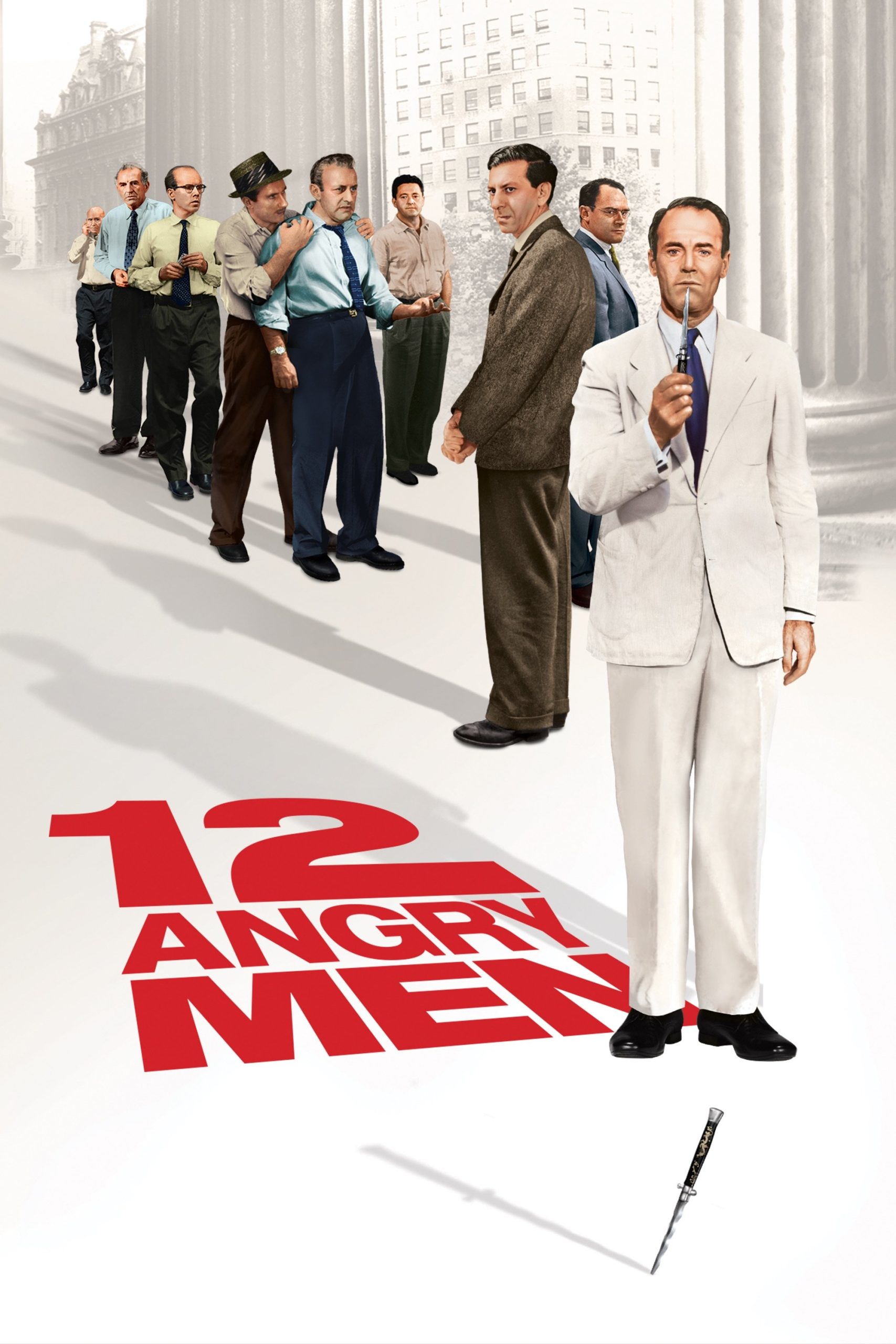
Is This Film Based on a True Story?
The 1957 film 12 Angry Men is not based on a true story. It is an entirely fictional account and does not depict an actual case, trial, or group of jurors. However, the setting and procedures portrayed in the film are grounded in the real-world context of the American judicial system during the mid-20th century.
The Real Events or Historical Inspirations
12 Angry Men originates from a television play written by Reginald Rose, which was produced for the anthology series Studio One in 1954 before being adapted into the 1957 feature film. While the narrative is not drawn from any particular real-life case, Rose was inspired by his own experience serving on a jury in the early 1950s. After participating in a Manhattan homicide jury trial, Rose was struck by the complexity and weight of jury deliberations, as well as the dynamic of group decision-making. These insights provided thematic and procedural authenticity, but the characters, murder case, and outcome described in the work are inventions of the author.
No specific court transcript, historical defendant, or actual jury deliberation forms the basis for the plot. Instead, Rose’s involvement with the judicial system informed his depiction of the deliberation process, reflecting typical jury service and American legal procedure at the time. The film also appears to synthesize general issues of prejudice, doubt, and civic duty prevalent in mid-century America, but it does not reference specific legal events, headline cases, or verifiable incidents.
What Was Changed or Dramatized
Because 12 Angry Men is not an adaptation of a true story or historical document, its dramatizations are rooted in the needs of compelling fiction rather than as modifications of real events. The details of the murder case at the heart of the film, including the accused teenager, the unique personalities of the jurors, and their distinctive conflicts, are all products of the playwright’s creative process.
To heighten tension and maintain a focused narrative, the film presents the entire deliberation in real time and confines the action to a single room. This compressed timeframe and intensified atmosphere are narrative choices designed to concentrate the dramatic arc, though real-life jury deliberations may take place over hours or days and are typically interspersed with breaks and changes of environment. In reality, the range of juror attitudes and personal backgrounds depicted in the film were shaped to illustrate various forms of bias, personal conviction, and doubt for dramatic effect, rather than based on actual individuals observed during Rose’s own jury service.
Furthermore, the case details—the nature of the crime, the evidence presented, and the ultimate resolution—are fictionalized to suit the themes explored, such as reasonable doubt and group dynamics. The film also simplifies or omits certain technicalities of legal procedure that might be present in a real trial, focusing instead on philosophical and ethical considerations of the jurors’ responsibilities.
Historical Accuracy Overview
While 12 Angry Men is a work of fiction, it has been widely noted for its realistic depiction of jury deliberation and its faithful representation of elements of mid-20th-century American courtroom practice. The film accurately reflects procedural norms such as the requirement for juror unanimity in criminal cases, the foreman’s role, and the principles of reasonable doubt that are core to the U.S. justice system.
The interpersonal dynamics and potential for prejudice or personal bias among jurors are also depicted in ways that align with research in social psychology and documented discussions on jury behavior. Legal scholars and practitioners have noted the film’s educational value for its representation of the moral and logical processes involved in deciding a verdict, even though the events are not real.
However, the film simplifies some aspects of the jury process for narrative purposes. The duration and setting of jury deliberations, the highly theatrical expressions of emotion, and the distinctive, individual characterizations of each juror are intensified for dramatic storytelling. While actual deliberations can be intense, they are rarely as neatly structured or as climactically resolved as the film’s depiction. Additionally, certain evidentiary details presented in the film—such as the handling of physical evidence by the jury members themselves—would not typically occur exactly as depicted, given the safeguards and rules governing evidence in a courtroom.
How Knowing the Facts Affects the Viewing Experience
Understanding that 12 Angry Men is a fictional narrative rather than an adaptation of true events can influence how it is interpreted by audiences. Viewers approaching the film as a realistic possibility rather than a factual account may focus on its exploration of general principles within the justice system, rather than treating it as an exposition of a historical case. Awareness of the work’s origins in an original teleplay also highlights the drama’s intention to probe universal themes, such as justice, fairness, and the potential for error in human judgment, through scenarios that are plausible but not literal records.
For those interested in actual history or legal procedure, knowing that the story is not biographical or documentary relieves the audience of the expectation that the events or characters correlate with specific people or incidents. Instead, the film can be appreciated for its commentary on civic responsibility, the value of due process, and the functioning of group deliberation under stress. The film’s realistic backdrop, inspired by the playwright’s own experiences, provides a framework that allows viewers to consider how ordinary individuals may be called upon to make weighty decisions, even if the situation depicted is hypothetical.
Academic and legal communities often use the film as a teaching tool, precisely because it offers an accessible, though dramatized, illustration of jury deliberation. Recognizing its fictional nature can allow audiences to engage more deeply with its moral questions and social analysis, focusing less on specific factual details and more on the broader implications for justice and collective decision-making in society.